Adelaide Earth Moving & Concrete
A Guide to Sealing Concrete in Adelaide
Sealing is the cheapest thing you will ever do to a concrete surface, yet it protects everything else you spent on it. In this guide, we explain why Adelaide’s climate makes it essential and how acrylic and penetrating sealers differ. We also walk through the application process from start to finish, and then show where a professional earns their fee.
10+
Years of Experience
Metro Wide
Adelaide Local Crew
Res & Com
Residential & Commercial
Site to Pour
One Coordinated Team
Why Sealing Concrete Is Crucial in the Adelaide Climate
Quick Answer
In short, how to seal concrete comes down to this: let new concrete cure, clean the surface thoroughly and repair any cracks. Then let it dry completely and choose a sealer that suits the finish and the location. Apply two thin, even coats in mild weather, keep traffic off it while it cures, and reseal every two to five years when water stops beading.
Search how to seal concrete and most guides assume a mild climate and a plain grey slab. Adelaide is neither. Our summer UV is among the harshest in the country. Consequently, week after week of forty degree sun bleaches unprotected coloured and exposed aggregate finishes within a few seasons. Then winter arrives and unsealed concrete drinks in the rain. That feeds moss and mould in shaded areas, and it also draws salts to the surface as white, blotchy efflorescence.
Four ways Adelaide attacks unsealed concrete
UV fading
Oxide colour and the natural tone of exposed stone dull under relentless summer sun. So a UV-stable sealer is the only thing standing between your finish and a washed-out version of it.
Stains soaking in
Unsealed concrete is porous, so oil, red wine, sunscreen, rust and leaf tannins pass the surface within minutes. On sealed concrete, however, they sit on top, bead like water on a waxed car and wipe away.
Moisture, moss and efflorescence
Winter rain soaks unsealed slabs. As a result, green growth spreads on the shaded side of the house and salts push up as white bloom. Sealing keeps the water out, so the surface stays dry.
Salt and pool chemistry
Coastal suburbs from Semaphore down to Seacliff cop salt air, while pool surrounds cop chlorine and salt splash daily. Both eat unprotected concrete slowly and stain it quickly.
The economics settle it. Sealing costs a small fraction of the concrete it protects. Restoring a faded, stained and weathered surface later, on the other hand, means grinding, resurfacing or in bad cases replacement. A sealed surface keeps its colour, sheds its stains and looks close to the day we poured it. That is exactly what you paid for when you chose a decorative finish.
Different Types of Sealers: Acrylic and Penetrating
Every sealer on the market falls into one of two families. The choice between them then sets the look, the lifespan and the maintenance of the surface for years.
Acrylic (topical, film-forming) sealers
Acrylics sit on the surface as a protective film. They come solvent-based or water-based, in matte through to high gloss. They are also what gives exposed aggregate its rich wet look and coloured concrete its depth. Solvent-based acrylics penetrate a little further, so they deliver the strongest colour lift. Water-based versions, by comparison, are lower in odour and easier to apply, with a softer sheen. Overall, acrylics are the default choice for decorative outdoor concrete.
Penetrating sealers
Silane, siloxane and silicate-based products soak into the concrete and react inside the pores rather than forming a film. As a result, the surface looks completely natural, stays breathable and keeps its original grip. That makes them the choice for plain grey driveways, garage floors and honed pool surrounds where slip matters, as well as any surface exposed to salt. They cannot deepen colour, though, and you cannot build them up for a glossier look later.
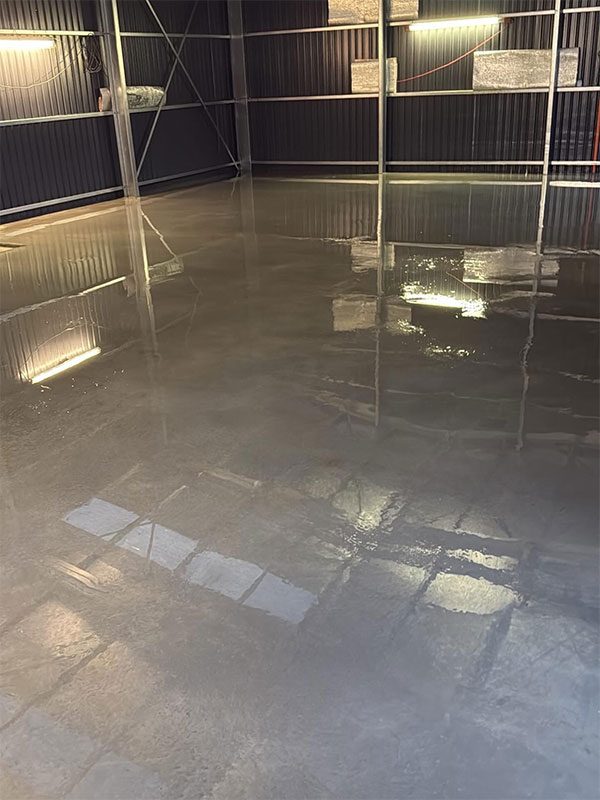
Polyurethane and epoxy coatings are a third, specialist category. They are high-build and very hard-wearing, so they mostly appear indoors on garage and warehouse floors. Without a specific UV-stable formulation, however, they yellow and chalk outdoors. They are therefore rarely the right answer for an Adelaide driveway or patio.
Pros and Cons of Each Sealer Type
| Factor | Acrylic (topical) | Penetrating |
|---|---|---|
| Appearance | Matte to high gloss; deepens colour and brings out the stone | Invisible; the concrete looks untouched |
| Protecting colour from UV | Strong with a UV-stable product | Limited; protects the concrete rather than the colour |
| Stain resistance | Excellent while the film is intact | Good against water-borne stains; oil resistance varies |
| Slip when wet | Can be slippery; grip additive recommended on slopes and wet areas | Unchanged from bare concrete |
| Lifespan before renewal | Two to three years outdoors in full sun | Five to ten years |
| Recoating | Simple: clean and reapply a compatible product | Reapply when water stops beading; cannot build gloss |
| Breathability | Lower; traps moisture and turns white over damp concrete | High; moisture vapour passes through |
| Best for | Exposed aggregate, coloured, stencilled and patio concrete | Plain driveways, pool surrounds, garages and salt-exposed areas |
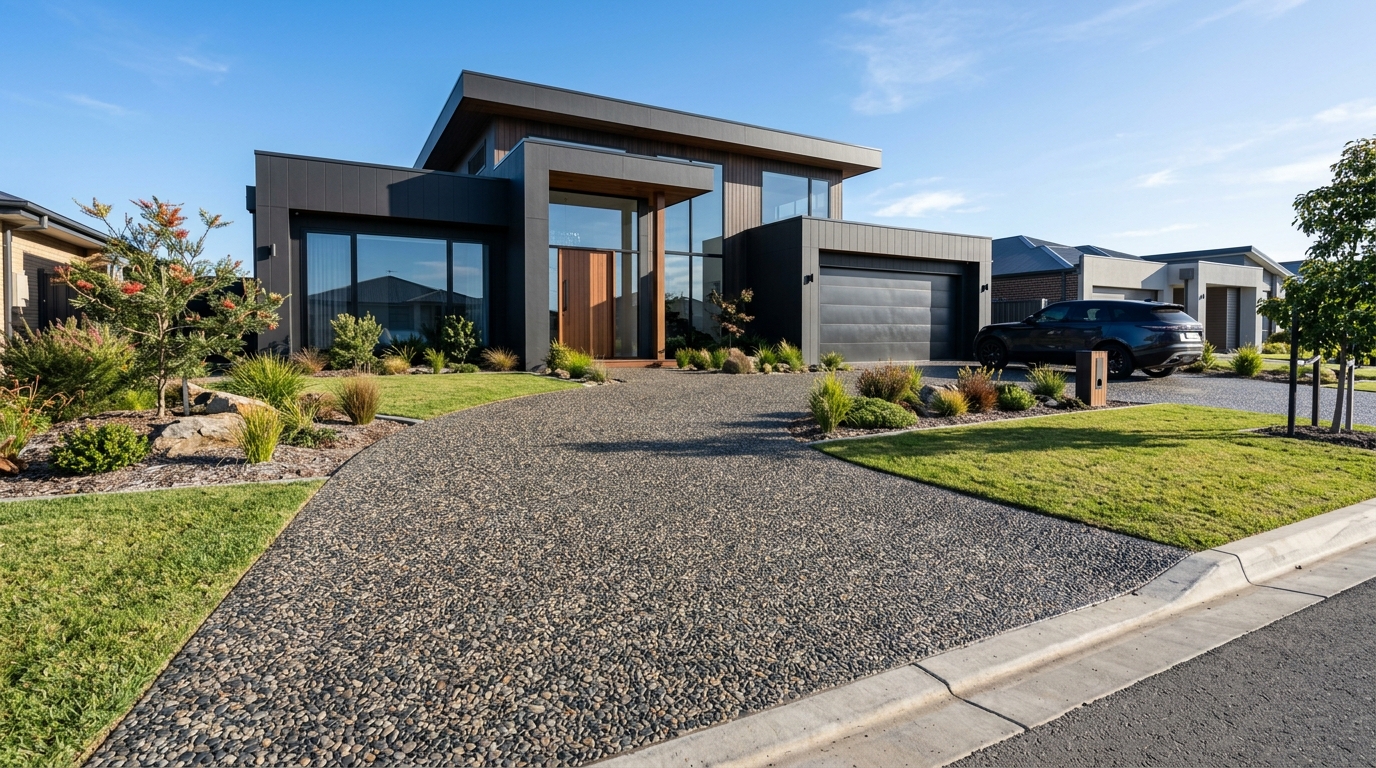
The answer to how to seal concrete for a pool surround is different from the answer for an exposed aggregate driveway. It is different again for a plain garage slab. In practice, we often combine the two families within one property. For example, a UV-stable acrylic goes on the decorative exposed aggregate driveway and alfresco for colour. Meanwhile, a penetrating sealer goes on the pool surround and paths, where grip and salt matter more than sheen.
How to Seal Concrete: The Application Process
Whichever product you choose, the sequence is the same. Most sealing failures, moreover, trace back to a skipped step rather than a bad product.
Preparation comes before the product
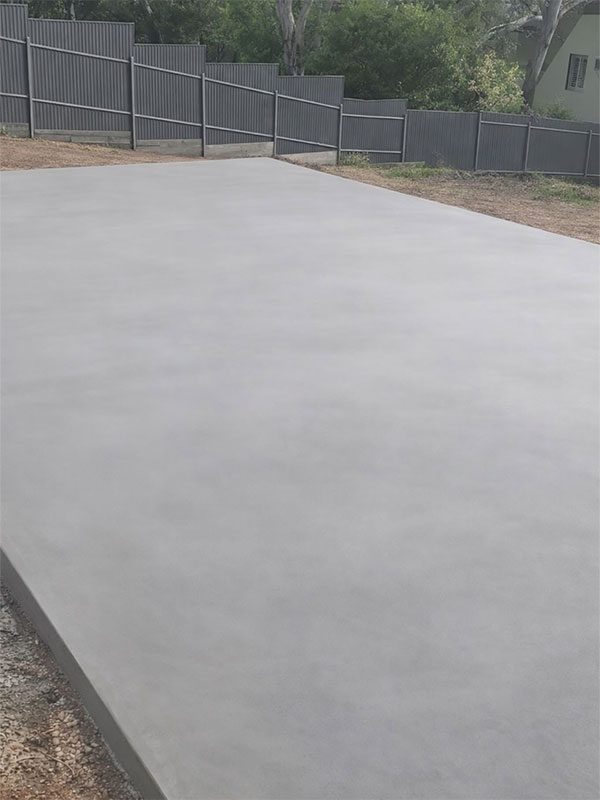
Wait for the concrete to cure
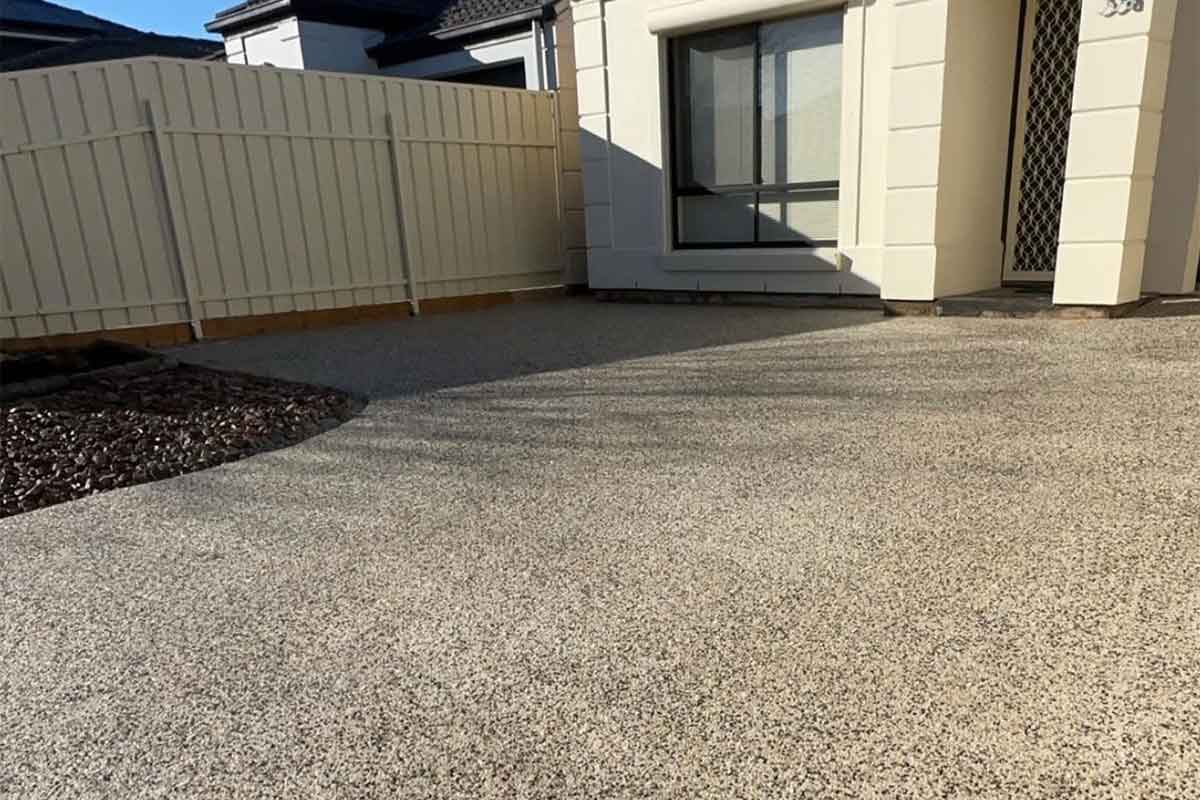
New concrete should cure for around 28 days before most sealers go on, or as the product allows. Some cure-and-seal products, however, go on earlier by design. Exposed aggregate has its own timing too: we wash off the surface after the pour, then seal it once it has dried out and cured.
Clean thoroughly
Pressure wash the whole area, degrease oil marks, and treat tannin, moss and rust. Remove efflorescence as well. Also strip any old sealer that is peeling, flaking or turning white, because new sealer bonds to whatever sits beneath it rather than to the concrete.
Repair before you seal
Fill cracks, re-cut or re-fill failed control joints and patch any spalling. Sealer locks in whatever is underneath it, so this is the last chance to fix it cheaply.
Let it dry completely
Allow 24 to 48 hours of dry weather after washing. Then tape a square of plastic sheet to the slab for a few hours. If condensation forms underneath, the concrete is still holding moisture, so a film sealer will trap it and turn cloudy.
Application and curing
Check the weather
Aim for a surface temperature between roughly 10 and 30 degrees, with no rain forecast for 24 hours. Avoid direct hot sun on the slab as well, because it makes solvent sealers flash off before they level. An early morning in autumn or spring is ideal, whereas a January afternoon is not.
Apply thin, even coats
Use a low-pressure sprayer and back-roll, or a quality roller for smaller areas. Thin coats bond and cure, whereas thick coats puddle, bubble and stay tacky. Work in sections and keep a wet edge. Before you start, mask edges, walls and adjoining surfaces.
Recoat when tack-free
Most products take a second thin coat once the first is dry to the touch, usually two to four hours later. Then add a grip additive to the final coat on driveways, ramps and pool surrounds.
Cure and protect
Keep foot traffic off for 24 hours and vehicles off for 48 to 72 hours, or longer in cool weather. Also avoid parking hot tyres on a freshly sealed driveway during the first week.
Maintain and reseal
Wash once or twice a year with a pH-neutral cleaner. Then reseal when water stops beading, typically every two to five years depending on sun, traffic and the product you used.
Why Professional Application Is Recommended
Knowing how to seal concrete is not the same as having done it several hundred times. Sealing is also one of those jobs where the mistakes look permanent, and they cost more to reverse than the original job.
Product compatibility
Solvent-based over water-based, or the wrong product over an old unknown sealer, causes peeling, blushing and blotching. For this reason, we identify what is on the slab before anything goes on top of it.
Moisture and timing
Sealing over damp concrete traps moisture, so the surface turns white and cloudy. Reading the slab, the forecast and the surface temperature is experience rather than guesswork.
Even coverage at the right thickness
Roller lines, lap marks, puddles and tacky patches are the signature of a rushed job. Commercial sprayers, back-rolling and the correct coverage rate, in contrast, give a uniform finish edge to edge.
Slip resistance
A glossy sealed driveway or pool surround without grip additive is a hazard. Therefore, we specify anti-slip in the final coat wherever bare feet or tyres meet a slope or water.
Stripping a failed sealer means grinding or chemical removal across the whole surface, which costs several times the original application. Our concrete sealing Adelaide team handles cleaning, preparation, product selection and application for exposed aggregate, coloured concrete and plain surfaces. Because we pour the driveways and slabs as well, we match the sealer to the finish from the start rather than choosing it afterwards.
FAQs
Adelaide Earth Moving & Concrete
Protect The Concrete You Paid For
Whether it is a new exposed aggregate driveway, a faded coloured patio or a plain slab that drinks every drop of rain, the Adelaide Earth Moving and Concrete team will assess it. Then we recommend the right sealer and apply it properly. Straight up pricing, no surprises.