Adelaide Earth Moving & Concrete
What Is Concrete? A Guide to Types and Uses
People use more concrete than any other building material on Earth, yet few understand it. In this guide, we explain what goes into it, as well as how it hardens. We also cover the main types you will meet on a residential or commercial job, where each one belongs, and what the strength grades on a concrete docket actually mean.
10+
Years of Experience
Metro Wide
Adelaide Local Crew
Res & Com
Residential & Commercial
Site to Pour
One Coordinated Team
What Is Concrete?
Quick Answer
Concrete is a composite of cement, water, sand and coarse aggregate, such as gravel or crushed rock. When you add water, the cement reacts chemically in a process called hydration. As a result, it binds the aggregate into a solid, stone-like mass that keeps gaining strength for weeks. Cement, therefore, is an ingredient in concrete rather than another name for it.
The mix-up between cement and concrete is certainly the most common one in the trade. Basically, cement is the fine grey powder that acts as the glue. Concrete, on the other hand, is what you get when that glue binds sand and stone together. It is the concrete rather than the cement that you park on, build on and walk across.
The Romans poured a version of it two thousand years ago, using volcanic ash rather than cement. Indeed, the dome of the Pantheon in Rome is still the largest unreinforced concrete dome in the world. Much later, in 1824, Joseph Aspdin patented modern Portland cement in England. It remains the basis of nearly every mix used today. Since then, the material has barely changed in principle: a binder, water, aggregate and time.
The Composition of Concrete
Cement (10 to 15 per cent)
Portland cement is the binder. Blended cements also add fly ash or slag from industrial by-products, which improves workability, lowers heat during curing and cuts the carbon footprint of the mix.
Water (15 to 20 per cent)
Water starts hydration. The ratio of water to cement is also the single biggest lever on strength. A lower water-to-cement ratio can improve strength, provided the mix remains workable and is properly placed, compacted and cured. Adding excess water can reduce strength and durability.
Aggregates (60 to 75 per cent)
Sand is the fine aggregate, while gravel or crushed rock, usually up to 20 millimetres, is the coarse aggregate. Aggregate gives concrete its bulk as well as its strength under compression. In exposed aggregate finishes, it also provides the good looks.
Admixtures and reinforcement
Chemical admixtures adjust the mix: plasticisers for flow, retarders to slow setting on forty degree Adelaide days, accelerators for winter, and oxide pigments for colour. Steel mesh or bars go in because concrete is roughly ten times weaker in tension than in compression. The steel therefore carries the loads that would otherwise crack it.
Concrete hardens through hydration and also loses moisture as it dries. Curing controls moisture and temperature to support strength development. Strength is commonly specified and tested at 28 days, but development can continue beyond that age. Follow the contractor’s curing and access instructions.
Different Types of Concrete
Ready-mix concrete
Batched at a plant to a specified grade and delivered by agitator truck. Nearly every driveway, slab and footing in Adelaide comes from ready-mix, because it is consistent as well as fast.
Reinforced concrete
Concrete with steel mesh or bars cast inside it. It is the standard for slabs, driveways, footings and beams, as well as anything that carries a load or spans a gap.
Precast concrete
Cast in a factory and delivered finished: wall panels, kerbs, pipes, pits and retaining blocks. The result is consistent quality, as well as fast installation on site.
Decorative concrete
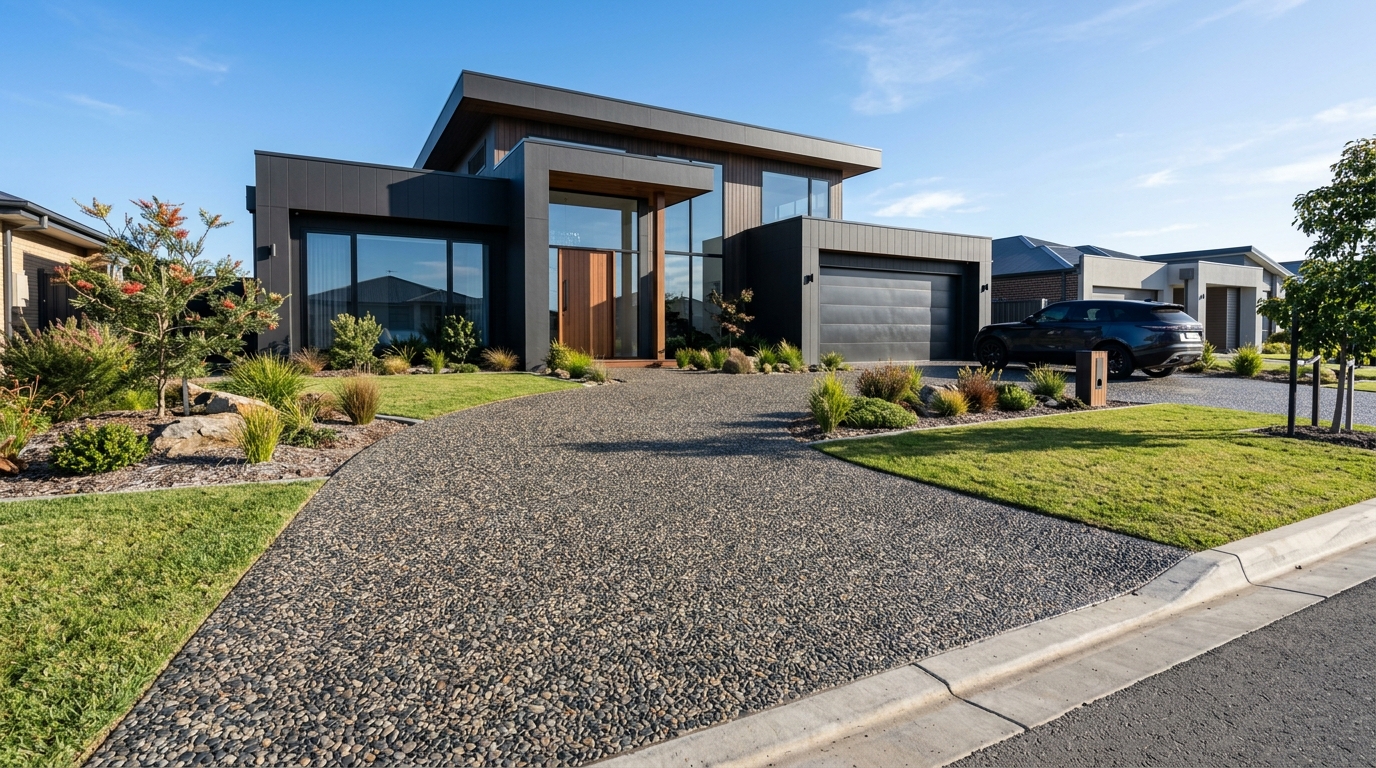
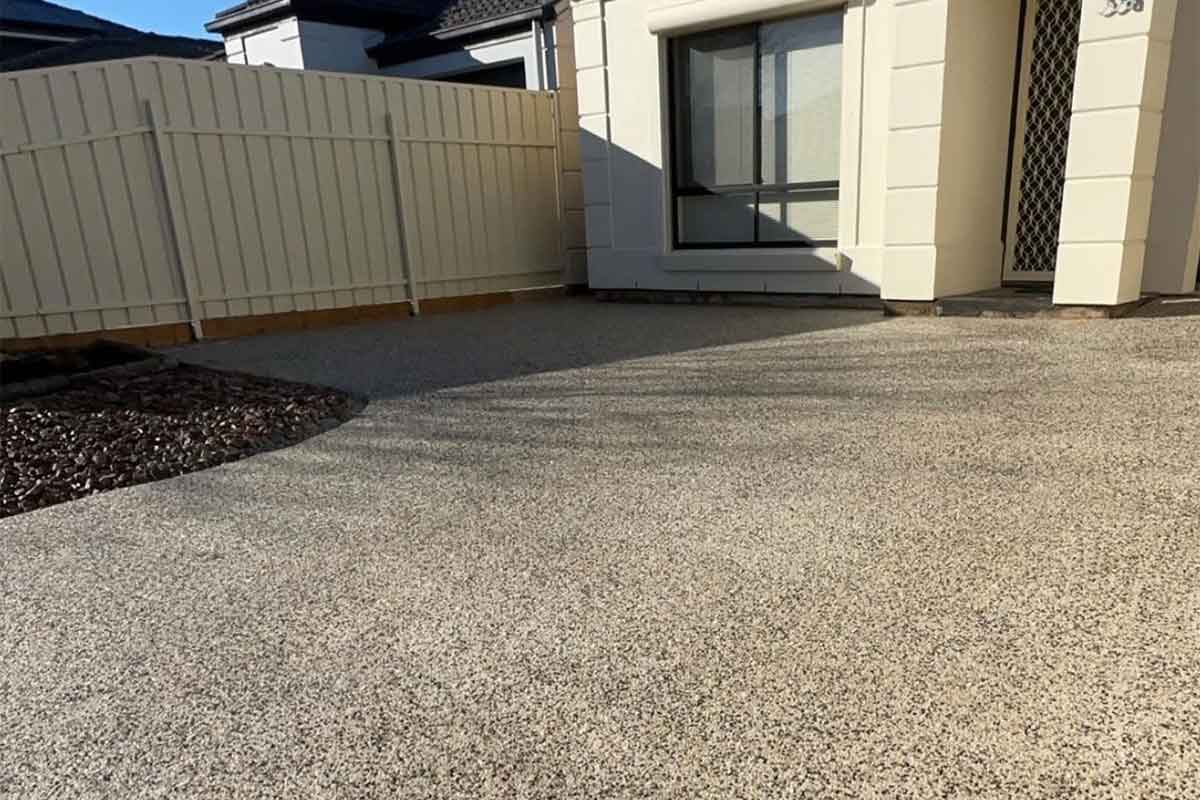
Structural concrete with a designed surface: coloured, exposed aggregate, honed, polished, stencilled or stamped. In other words, the same slab doing design work as well.
Prestressed and post-tensioned
Steel tendons tensioned before or after the pour compress the concrete, so it spans further with less depth. Bridges, car parks and large commercial floors all rely on it as a result.
Specialist mixes
Shotcrete sprayed for pools and retaining walls, lightweight concrete where load matters, and high-strength mixes for tall structures. Pervious concrete, meanwhile, lets stormwater drain straight through it.
For most homeowners, the practical choice is simply between plain ready-mix and a decorative finish on the same slab. The required thickness, reinforcement and base preparation depend on the project design, loading and site conditions. The difference lies in the mix you order, as well as the finishing work done on the day of the pour.
Common Uses in Construction
Residential
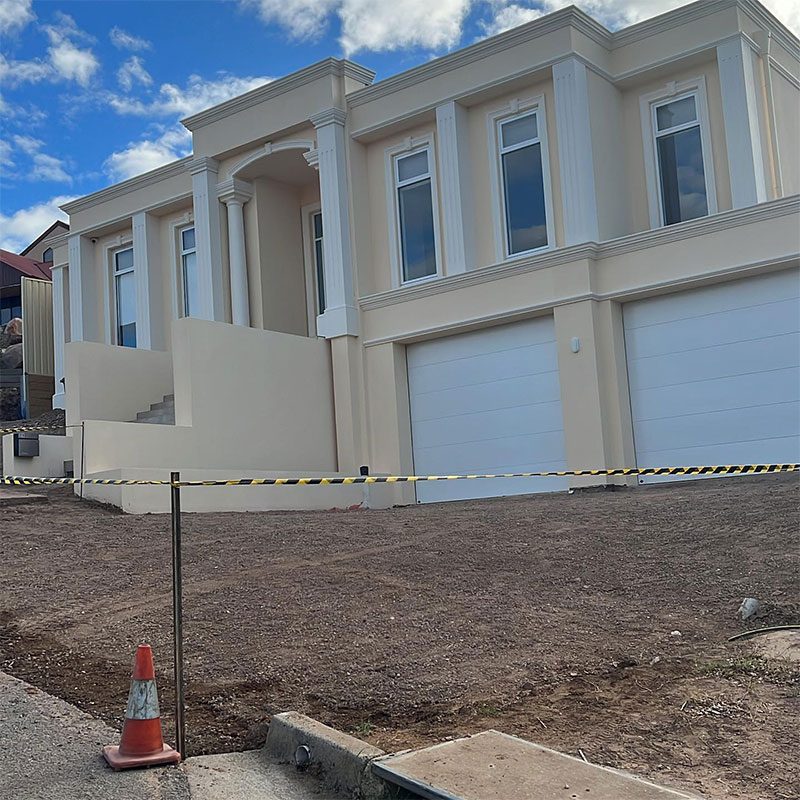
House slabs and footings, driveways and crossovers, paths, patios and alfresco areas, pool surrounds, shed and garage slabs, garden edging and retaining. On Adelaide’s reactive clay, moreover, engineers design footings and slabs to the site’s soil classification. After all, the ground here moves more than in most Australian cities.
Commercial and industrial
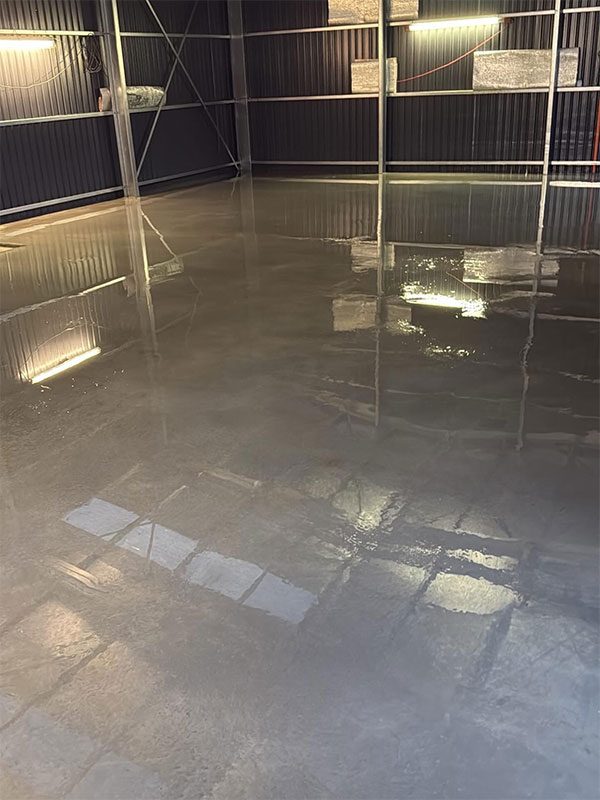
Warehouse and factory floors designed for forklifts and racking, car parks and hardstands, loading docks, kerbing and drainage. Commercial driveways belong here too, because trucks rather than cars use them.
Civil
Roads and bridges, culverts and pipes, dams and water infrastructure, footpaths and kerbs. Most of it uses reinforced or prestressed concrete, and all of it must also meet strict exposure and durability standards.
Across Adelaide, meanwhile, we pour the residential and commercial end of that list every week: shed and garage slabs, concrete driveways, commercial concreting and warehouse flooring. Moreover, the same crew handles the earthworks under each of them.
Concrete Strength and Grades
In Australia, you order ready-mix by grade in line with the AS 1379 standard. Basically, the grade tells you the strength. The letter N marks a normal-class mix, while the number is its characteristic compressive strength in megapascals (MPa) at 28 days. N25, for example, specifies a characteristic compressive strength of 25 MPa at 28 days. This is a concrete test property, not an allowable load rating for a finished slab.
| Grade | Strength at 28 days | Illustrative uses; confirm the project specification |
|---|---|---|
| N20 | 20 MPa | Paths, edging and blinding where the project specification permits |
| N25 | 25 MPa | Driveways, shed slabs, house slabs and patios; the everyday residential workhorse |
| N32 | 32 MPa | Commercial floors, car parks, coastal and salt-exposed work, structural elements |
| N40 | 40 MPa | Heavy industrial floors, columns, beams and engineered structures |
| N50 | 50 MPa | High-rise, bridges, precast and specialist structural work |
Reading the rest of the docket
Grade, however, is only one line on an order. Slump, for instance, describes how wet and workable the mix is, typically 80 to 100 millimetres for slabs placed by hand. Maximum aggregate size is usually 20 millimetres, although 10 millimetres suits thin sections and some decorative work. Special-class mixes, marked S, have specified requirements outside the normal-class parameters. Decorative concrete also needs its colour, aggregate and finish agreed with the supplier; a decorative finish alone does not determine the concrete class. Exposure matters too. A slab in a coastal suburb or around a saltwater pool needs a higher grade and more cover over its steel than one in an inland backyard.
For a homeowner, the practical takeaway is that strength does not come from the grade alone, but from the whole build. Even higher-strength concrete can crack if the base or structural design is unsuitable. Service life depends on design, ground conditions, workmanship, curing, exposure and maintenance. That is why our quotes spend as much time on excavation and compaction as on the concrete itself.
FAQs
Adelaide Earth Moving & Concrete
Know What You Need? We Will Build It.
From engineered shed slabs to exposed aggregate driveways and commercial floors, the Adelaide Earth Moving and Concrete team specifies the right mix, the right reinforcement and the right base for the job. Then we pour it clean, so it lasts. Straight up pricing, no surprises. Learn more about our concrete Adelaide services and local team.