Adelaide Earth Moving & Concrete
What to Look for When Hiring a Driveway Concreter in Adelaide
A driveway has to do more than look good on pour day. This practical guide helps you compare contractors, understand what a sound quote should include, and ask the right questions about preparation, drainage and finish before you commit.
The short answer
Quick answer
Choose a driveway concreter who can explain the complete build: site assessment, removal and excavation, base preparation, levels and drainage, reinforcement, concrete finish, joints and curing. Check the appropriate licence, compare written scopes and look at recent work similar to your property. The lowest total is hard to judge if major steps are missing from the quote.
This guide is for Adelaide homeowners and project managers comparing concrete driveway contractors. It complements our concrete driveways in Adelaide service page, which explains our installation process and finish options.
1. Check the licence and relevant experience
Ask for the contractor’s business name and licence number, then check the details and authorised work on the SA Government licensing register. A licence number printed on a quote is a starting point, not a substitute for checking the current register. If specialist work is part of the job, ask who will perform it and whether they hold the required credentials.
Request examples of completed driveways with a similar slope, access, soil or finish. A fresh photograph can show a neat surface and edges; it cannot show how the base was prepared or how the driveway performs after seasons of traffic. Ask how the contractor dealt with drainage, levels and any difficult site conditions on those jobs.
2. Ask what happens beneath the concrete
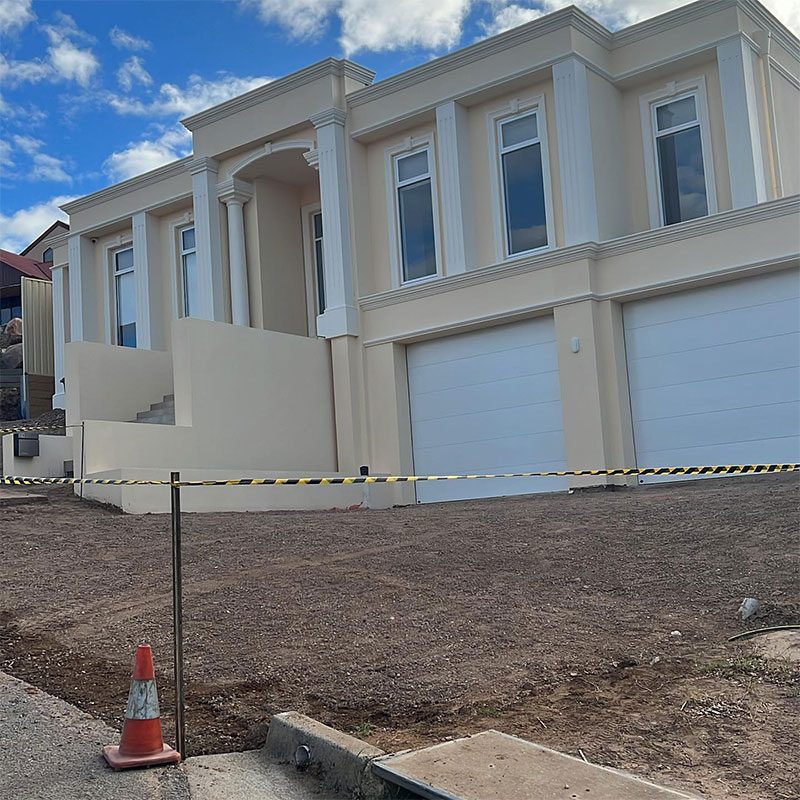
A quote should explain the work before the truck arrives. Adelaide blocks can differ in slope, access, existing fill, drainage and ground movement, so a contractor should assess the site before specifying the build. Avoid treating a single slab thickness or mix grade as a universal answer for every driveway.
Existing surface and excavation
Will old concrete or paving be removed? Who removes it, where will spoil go, and what happens if unsuitable fill is found?
Base and compaction
What base material and preparation are included? How will the crew establish levels and compact the base for the intended vehicle use?
Drainage and falls
Where will water go in heavy rain? Ask how the driveway will meet the garage, footpath and adjacent areas without directing water toward buildings or neighbours.
Reinforcement and joints
Ask what reinforcement and joint layout the design calls for and how those details suit the site. Concrete can still develop cracks; good design manages the risk rather than promising none.
Our earthworks and site preparation page explains why ground preparation is part of the job, not an optional extra.
3. Compare the written scope, not just the total
Put quotes side by side and check that they describe the same finished result. A lower figure may exclude demolition, disposal, a drainage detail or the finish you expected. Ask for any assumptions and exclusions in writing before you choose.
- Area and access. Confirm measured dimensions, driveway shape, access for machinery and concrete delivery, and whether work must be staged.
- Preparation. Check excavation, removal of the old surface, spoil disposal, base material and compaction.
- Concrete and finish. Confirm the specified design or engineer’s requirements, reinforcement, edge treatment, jointing and the exact finish: plain, broom, coloured or exposed aggregate where offered.
- Drainage and crossover. Clarify falls, drains, tie-ins and whether any council-land works, permit applications or fees sit outside the price.
- Timing and aftercare. Ask about start dates, weather delays, access restrictions, curing instructions, cleanup, variations and payment stages.
For a fuller breakdown of price drivers, see our driveway cost guide. A site-specific written quote is more useful than a generic rate per square metre.
4. Match the finish to how the driveway will be used
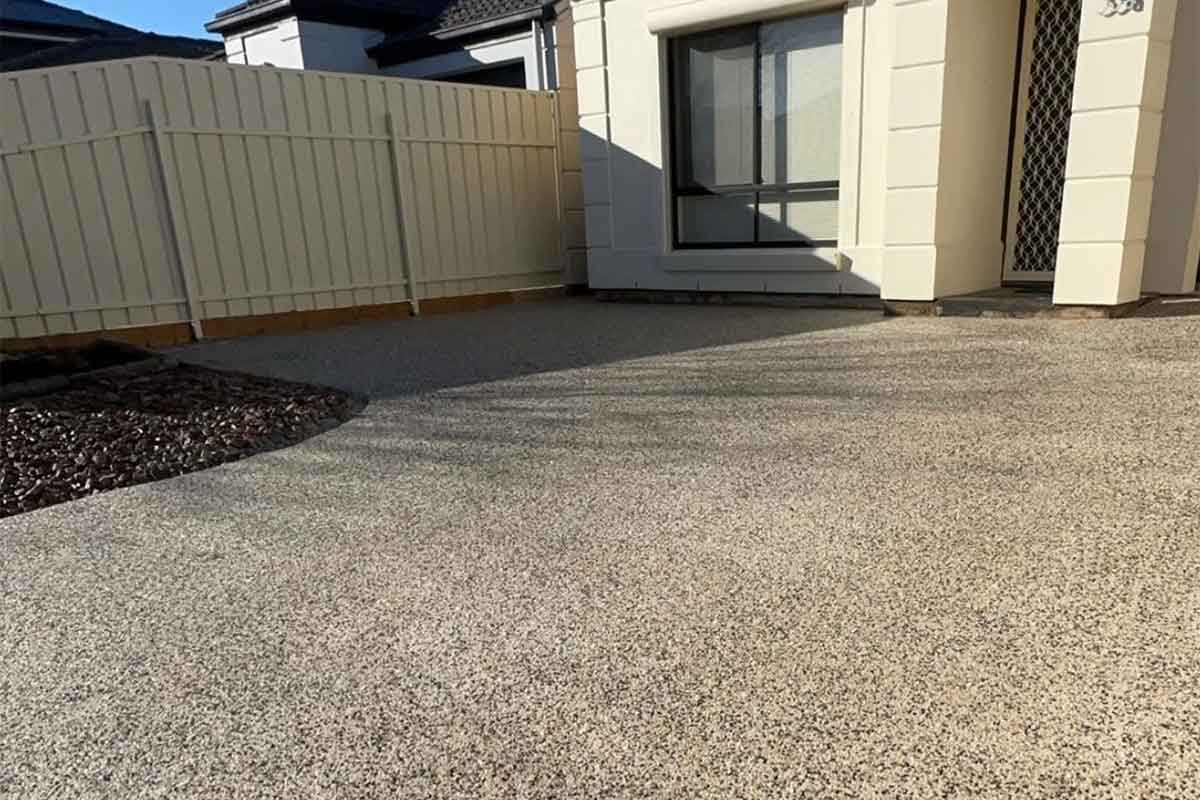
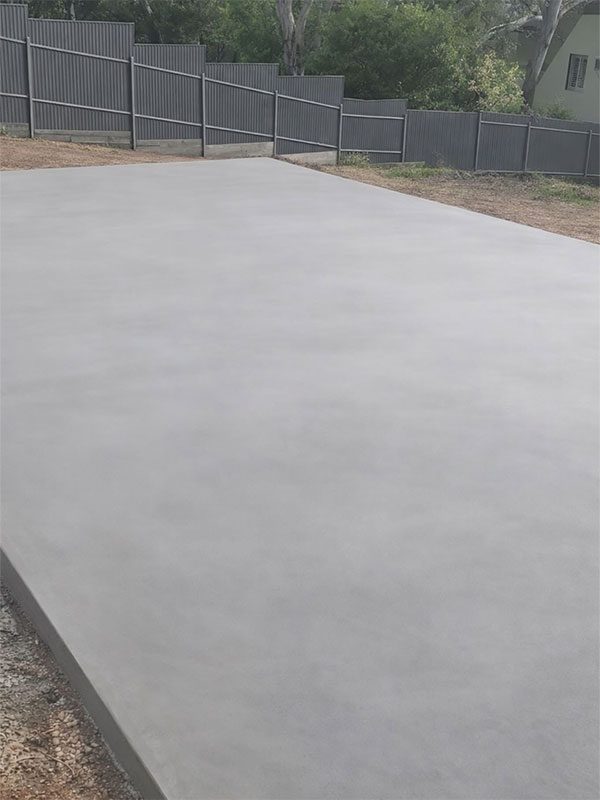
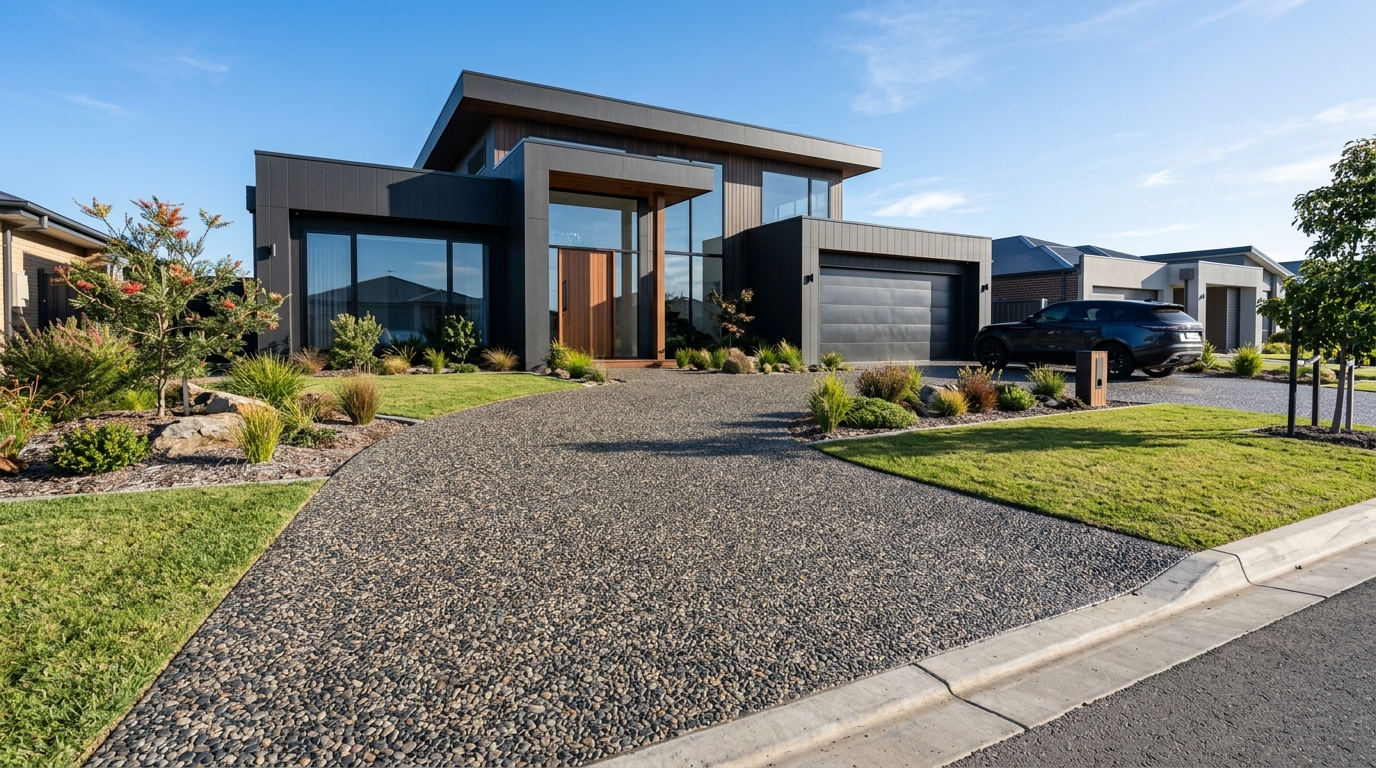
Choose the surface with the property and daily use in mind. Plain concrete can be practical and understated. A textured broom finish can offer grip. Exposed aggregate and coloured concrete can change the look, but the colour, aggregate, texture and maintenance expectations should be agreed before the pour. A sample helps, although natural variation can still occur.
Ask how the proposed finish will meet paths, steps, garage floors and the public crossover. On sloping sites, discuss traction and safe access. If heavy vehicles will use the driveway, tell the contractor early; the loading may change the design and base requirements.
Before you sign, settle the handover details
Ask who will supervise the site and who you should contact if the ground conditions differ from the quote. Agree how changes will be described, priced and approved before extra work begins. Confirm which party protects adjoining surfaces, arranges access and removes waste when the job is finished.
Also ask for the care instructions in writing. New concrete needs suitable curing and protection from early traffic, and a decorative finish may have separate cleaning or sealing advice. A clear handover helps you compare contractors on the whole service, not just on the day the concrete is poured.
5. Check the approval boundary early
The driveway on your property and the crossover through a verge or footpath are different parts of the job. Council authorisation is commonly required for work on public land, and any development approval question depends on the site and proposal. Before booking a pour, ask your council what applies to the address and who will prepare the application if one is needed.
The City of Prospect guidance is a useful local example: it explains that private-property development approval does not itself authorise works on council land. Requirements differ between councils, so use the guidance for the property’s actual council area.
Why the whole sequence matters
A good contractor can explain the sequence from site assessment through to curing, including who is responsible for each stage. Adelaide Earthmoving & Concrete handles driveway projects from earthmoving and base preparation through to formwork, reinforcement, pouring and finishing. That coordinated scope makes it easier to discuss levels and drainage before the concrete arrives.
Explore our concrete driveways in Adelaide options, or ask us to review the site and provide a quote with the proposed work clearly set out.
Frequently asked questions
What should I ask at a driveway quote?
Ask for the complete scope, including old-surface removal, excavation, base preparation, drainage, reinforcement, joints, finish, crossover responsibilities, cleanup and curing instructions. Confirm assumptions and exclusions in writing.
Should I choose the cheapest driveway quote?
Compare what is included before comparing totals. A lower quote may be suitable, but only if it covers the same design, preparation, finish and access requirements. Ask how variations will be approved and priced.
How soon can I drive on a new concrete driveway?
There is no safe universal date. Weather, mix, thickness, curing and vehicle load affect the timing. Follow the contractor’s specific instructions before walking or parking on the new surface.
Adelaide Earth Moving & Concrete
Discuss Your Driveway Project
Tell us about the site, vehicle use and finish you have in mind. We can discuss the preparation and provide a clear quote for the proposed driveway work.